SMSTEEL
Choosing the right Galvalume Steel Coil supplier is more than comparing prices. It requires evidence, technical judgment, and practical experience. The World Steel Association reported approximately 1.89 billion tonnes of global crude steel production in 2023. That scale shows the market’s strength, but it also creates wide differences in quality, service, and traceability. Supplier claims should never replace test data.
A reliable supplier should provide coating mass, yield strength, tensile strength, elongation, coil width, thickness tolerance, and inspection records. Ask whether production follows ASTM A792/A792M or an equivalent standard. Confirm the 55% aluminum-zinc coating composition, surface finish, edge condition, and packaging method. A poorly protected coil may arrive with wet-storage stains, damaged edges, or uneven surfaces. Small defects become expensive after roll forming.
Dr. Frank Goodwin, a recognized Galvalume technical specialist, stated, “Coating performance depends on both alloy design and process control.” That principle remains practical. The best supplier should explain how its bath chemistry, cooling system, and line speed are controlled. It should also show recent third-party test results, not only marketing photographs.
Reports from the International Zinc Association and industry analysts, including CRU, indicate that coated-steel demand is influenced by construction, infrastructure, and manufacturing cycles. Forecasts vary. So should your evaluation.
A low quotation can hide inconsistent thickness, delayed delivery, or weak technical support. I have seen buyers focus on the first invoice and overlook production losses. That is a costly lesson. Choose a supplier that documents performance, communicates clearly, and accepts independent inspection before shipment. Reliability must be measurable.
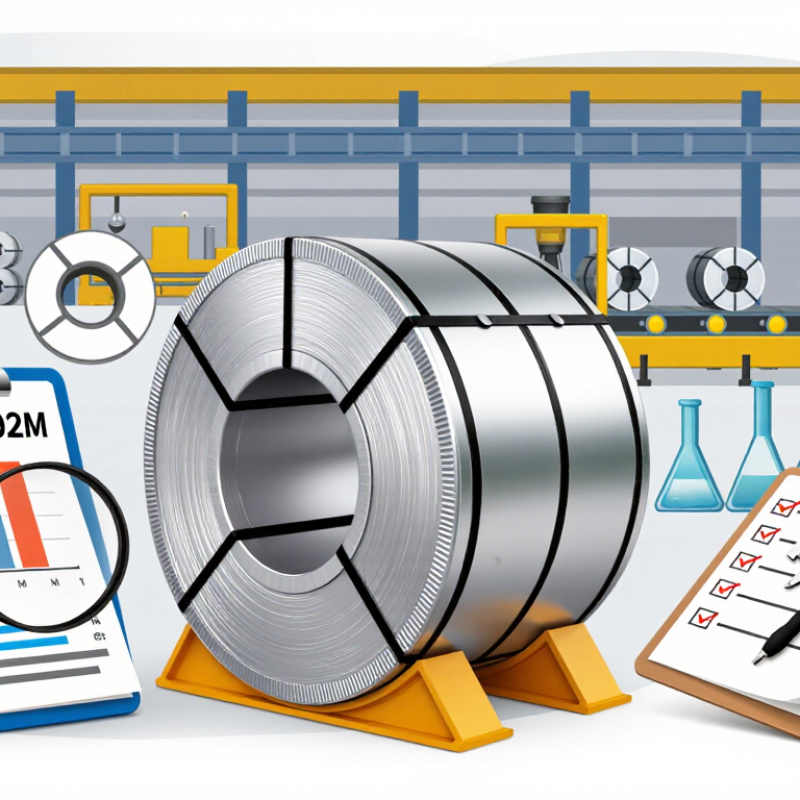
Galvalume steel is carbon steel coated with aluminum, zinc, and a small amount of silicon.
This metallic layer helps resist corrosion and heat. It also reflects sunlight, which can reduce surface temperature in some building applications. The coating is not a magic shield. Scratches, cut edges, standing water, and poor drainage can still shorten its service life.
Supplier selection matters because the coil’s performance depends on more than its appearance. A reliable supplier should provide the steel grade, coating designation, thickness tolerance, width tolerance, and mechanical test results.
Ask for current inspection records, not only a polished product brochure. Check whether the coating weight is measured consistently across the coil. Small variations can become visible problems during forming.
Look closely at packaging, too. Coils should arrive with firm strapping, dry wrapping, and clear identification labels. Moisture trapped between tightly wound laps may cause storage stains before fabrication begins.
I have seen buyers focus heavily on price and overlook transport conditions. That choice can be expensive. I also once treated a supplier’s delivery history as proof of quality, which was too simple.
A better review includes sample testing, communication speed, claim handling, and production capacity. Visit the facility when possible. Ask practical questions about edge protection, coil storage, and corrective action records. Be cautious when answers remain vague.
When choosing a galvalume steel coil supplier, verify qualifications before comparing prices. Request a valid ISO 9001 certificate, issued by an accredited certification body. The ISO Survey 2023 recorded more than 1.26 million ISO 9001 certificates worldwide. That number shows its importance, but certification alone proves little. Check the certificate scope, factory address, expiry date, and audit status. The scope should cover steel coil manufacturing, coating, or related processing.
Ask for mill test certificates for every production lot. They should show yield strength, tensile strength, elongation, thickness, width, coating mass, and heat number. For galvalume products, compare the specification with ASTM A792/A792M or the applicable EN standard. ASTM A792 describes aluminum-zinc alloy-coated steel sheet, commonly using a 55% aluminum coating alloy. Do not accept a generic “AZ coating” statement without test evidence. Traceability matters. The heat number on the coil tag should match the certificate and packing list.
Tips: Request recent independent test reports, not only supplier-issued documents. Check whether laboratories hold ISO/IEC 17025 accreditation. Review environmental and occupational safety certifications when responsible sourcing matters; the ISO Survey 2023 lists nearly 596,000 ISO 14001 certificates globally. Visit the plant if volume is significant. Look at coating lines, sampling records, storage conditions, and calibration labels. A clean showroom is not enough. I would also verify complaint records and corrective-action practices, because even qualified suppliers can miss a coating defect.
Choosing a galvalume steel coil supplier requires more than comparing prices. Check the coating designation, substrate grade, and test records. Galvalume coating typically contains about 55% aluminum, 43.4% zinc, and 1.6% silicon by weight. ASTM A792/A792M identifies common coating classes, including AZ150 and AZ180, measured across both surfaces. Numbers matter.
Request a mill test certificate for every production lot. Confirm thickness, width tolerance, yield strength, tensile strength, elongation, and coating mass. Inspect sample edges for exposed steel, pinholes, oil stains, and uneven coating. Look closely. ISO 9223 classifies atmospheric corrosivity, so supplier claims should match your site’s humidity, salt exposure, and industrial pollution. A coastal roof needs different evidence from an indoor partition.
Salt-spray results under ASTM B117 can help compare batches, but they do not reproduce every outdoor condition. This is often overlooked. A longer test time does not automatically prove longer service life. Ask for outdoor exposure data, storage guidance, and packaging details. Coils should arrive dry, tightly wound, and protected from trapped moisture. In practice, supplier reliability also appears in small details: traceable labels, prompt nonconformance reports, and consistent delivery records. Some specifications remain incomplete without surface-finish limits. That gap deserves questioning. Industry data supports disciplined comparison, but field performance still depends on design, cutting, fastening, and drainage.
Price evaluation should begin with delivered cost, not the mill’s headline quotation. Request a clear breakdown for base steel, coating mass, slitting, packaging, inland freight, and insurance. The World Steel Association reported 1,888.2 million tonnes of crude steel production in 2023. Such scale creates price volatility, so compare offers issued within the same week. Check the coil width, thickness tolerance, minimum order, and payment terms. A cheaper offer can become expensive after rework or port storage.
Production capacity needs physical evidence. Ask for monthly Galvalume output, line width, coating range, and recent inspection records. ASTM A792 specifies requirements for aluminum-zinc alloy-coated steel, including coating designation and mechanical properties. Review mill test certificates against independent test results. A supplier claiming large capacity should explain maintenance schedules and backup lines. Claims are not proof. I would also inspect sample edges, surface uniformity, and coil winding before signing a long contract.
Delivery reliability depends on planning, not promises. The World Bank’s Logistics Performance Index 2023 evaluates customs, infrastructure, international shipments, logistics competence, tracking, and timeliness. Ask suppliers to provide shipment records for the past twelve months, including promised dates and actual arrival dates. Measure the percentage delivered on time. Require a realistic production window, packing photographs, container plans, and delay notifications. Keep safety stock for critical projects. This costs more, but one missed installation can cost more. I once trusted an attractive lead time without checking port congestion; that judgment was poor.
A reliable galvalume steel coil supplier should provide more than a competitive quotation. The World Steel Association reported 1.892 billion tonnes of crude steel production in 2023. Such scale makes traceability and consistent service essential. Ask for mill test certificates, coating results, heat numbers, and shipment photographs. Each document should match the delivered coil.
After-sales terms need precise wording. Confirm the response time for quality complaints, usually within one or two business days. Define who pays for independent testing, return freight, replacement material, and production losses. The contract should state coating mass, steel grade, thickness tolerance, width tolerance, coil weight, surface requirements, and packaging standards. Referencing ASTM A792 or an equivalent specification reduces ambiguity. A warranty is useful only when its exclusions are readable.
Check the contract’s inspection and acceptance procedure. It should explain sampling, testing laboratories, claim deadlines, and evidence requirements. Include delivery conditions under Incoterms, insurance responsibility, payment milestones, and remedies for late shipment. Keep batch traceability through unloading and storage. Humidity, salt exposure, and poor ventilation can damage coils after delivery, so storage responsibilities must be shared clearly. This detail is often missed.
Do not accept “lifetime support” as a promise. Request named contacts, escalation channels, spare documentation, and a written service-level commitment. ISO 9001 emphasizes controlled processes and documented corrective actions, but certification alone cannot guarantee performance. I have seen polished paperwork hide weak follow-up. A small trial order may reveal more than a confident sales presentation.
Galvalume steel is carbon steel coated with aluminum, zinc, and a small amount of silicon. The coating helps resist corrosion and heat. It may also reflect sunlight. Not a magic shield.
Supplier quality affects coating consistency, thickness accuracy, forming performance, and delivery condition. A low price can hide future repair costs. Appearance alone proves little.
Request mill test certificates for every production lot. They should include grade, thickness, width, coating mass, strength, elongation, and heat number. Current records matter more than polished brochures.
Ask how coating weight is measured across each coil. Small variations may appear during bending or forming. Request recent test results. Do not accept vague coating descriptions.
Look for a valid quality-management certificate from an accredited certification body. Check its scope, factory address, expiry date, and audit status. Certification alone is not enough.
The heat number on the coil tag should match the test certificate and packing list. This links the material to its production records. Labels matter.
Coils should have firm strapping, dry wrapping, clear labels, and protected edges. Moisture trapped between laps can create storage stains. Wet packaging is a warning.
Review sample testing, communication speed, claim handling, capacity, and corrective actions. Visit the facility when possible. I once trusted delivery history too much. That judgment was incomplete.
Choosing the best Galvalume Steel Coil supplier requires more than comparing prices. Galvalume steel combines the strength of steel with the corrosion resistance of an aluminum-zinc coating, making supplier reliability essential for long-term performance. Buyers should verify the supplier’s company qualifications, quality management systems, testing procedures, and relevant certifications. They should also review coil specifications, coating weight, thickness tolerance, surface quality, mechanical properties, and performance consistency to ensure the material meets project requirements.
A thorough comparison should include pricing transparency, minimum order quantities, production capacity, lead times, packaging, and delivery records. Reliable suppliers should be able to provide clear technical documents, inspection reports, and realistic production schedules. Before placing an order, confirm warranty coverage, product traceability, claims procedures, payment terms, and responsibilities for transportation or quality issues. A supplier that offers responsive after-sales support and well-defined contract terms can help reduce purchasing risks and build a dependable long-term supply relationship.
