
SMSTEEL
Choosing Corrugated Steel for a project requires more than comparing prices or selecting the thickest sheet. The right material depends on structural loads, climate, span, appearance, maintenance, and installation conditions. A roof beside a salty coastline needs different protection than a storage wall in a dry inland workshop. Small details matter. Gauge, profile depth, coating type, and fastener quality all affect performance.
Architect Glenn Murcutt has said, “I use corrugated iron because it is a very Australian material.” His observation highlights an important point: Corrugated Steel is both practical and visual. Its regular ribs can strengthen sheets, guide water, and create a distinctive architectural surface. However, a familiar material is not automatically suitable. Engineers should verify wind uplift, snow loads, fire requirements, drainage, and compatibility with supporting frames. Relevant ASTM or AISI guidance can help confirm product quality and design assumptions.
Experience on real projects also reveals common mistakes. Some buyers focus on sheet thickness while ignoring corrosion protection. Others choose a profile that looks attractive but cannot span the required distance. Installation errors can create leaks, even when the steel meets specifications. That is uncomfortable, but useful to remember. A reliable selection process compares performance data, supplier reputation, warranties, and lifecycle costs. It also allows room for honest uncertainty. Local exposure, future repairs, and changing project requirements may challenge the original choice. Careful questions usually produce better steel decisions than confident guesses.
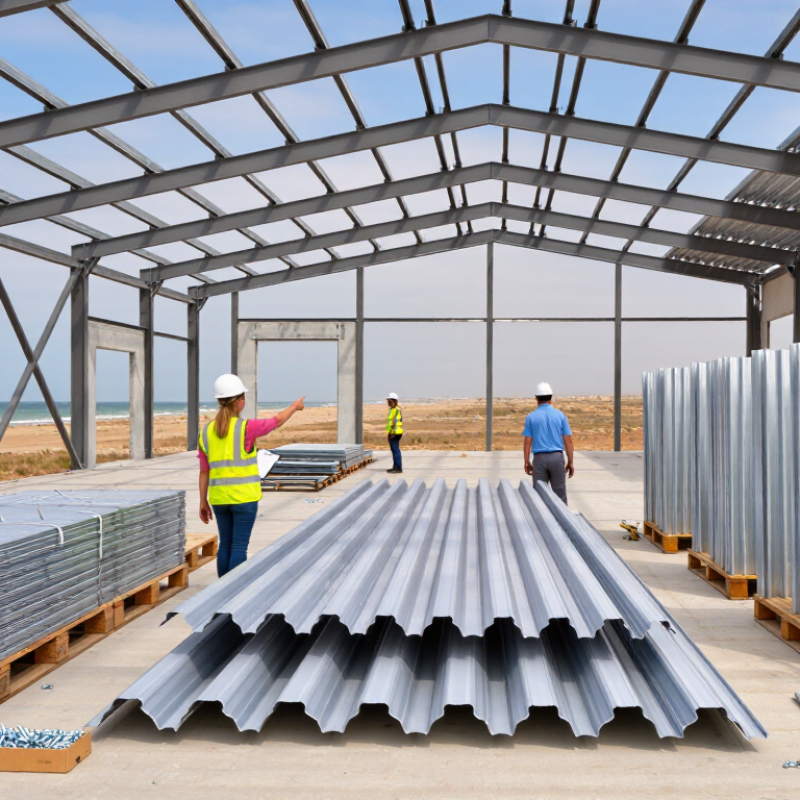
Corrugated steel should match the project’s actual loads, environment, and service life. Start with span, dead load, live load, wind exposure, drainage, and installation access. A neat specification can still be wrong. Soil pressure may control buried structures, while wind suction may control exposed panels.
Strength is only one performance criterion. ASTM A653 lists structural steel grades with minimum yield strengths from 33 to 80 ksi, depending on grade. Higher strength can reduce thickness, but it may complicate forming and field repairs. Check local buckling and connection capacity under AISI S100 design procedures. Measure corrugation depth and pitch carefully. Small dimensional changes can affect stiffness.
Corrosion protection deserves equal attention. A G90 zinc coating provides 0.90 oz/ft² total coating on both sides, or about 275 g/m², under ASTM A653. That value is not a guaranteed service-life prediction. Soil moisture, chloride content, pH, abrasion, and drainage can change performance significantly. FHWA’s Hydraulic Design of Highway Culverts, HDS-5, stresses site-specific hydraulic and structural evaluation for culvert selection. Its guidance supports checking flow velocity, inlet conditions, and outlet protection before choosing a profile. On site, a clean-looking sheet can hide damaged edges. Specify inspection points, coating repair procedures, and tolerances before delivery. I would also question an assumed design life. Local exposure data may be incomplete. That uncertainty should appear in the risk assessment.
Choosing corrugated steel starts with the environment, not appearance. Steel grade affects strength, forming behavior, and load capacity. For many roofing and wall applications, structural grades around 340–550 MPa yield strength may suit different spans and support designs. Higher strength is not always better. Thin, strong sheets can be harder to form and more sensitive to installation damage.
Coating selection controls corrosion resistance. Hot-dip galvanized steel uses zinc as a barrier and sacrificial protection. Aluminum-zinc coatings can perform well in rural and industrial atmospheres, but cut edges and fastener areas still need attention. Painted metallic coatings add color and another barrier, yet scratches may expose the base steel. AMPP’s IMPACT study estimated global corrosion costs at about US$2.5 trillion annually, equal to roughly 3.4% of global GDP. That figure makes small detailing decisions less small. ISO 12944 also stresses that corrosivity category, humidity, salt, and pollutants should guide coating specifications. Site exposure matters more than a generic “weather-resistant” claim.
Tips: Check the coating mass, not only the product name. Confirm the steel grade against span tables and local design loads. Inspect overlaps, drilled holes, and cut edges before installation. I would also request project-specific test data. Laboratory results cannot perfectly predict a coastal roof with trapped moisture. The honest choice may require thicker coating, better drainage, or planned inspection intervals. Scratches happen. Unnoticed scratches are the real problem.
| Steel Option | Typical Grade or Coating | Typical Mechanical Data | Corrosion Resistance | Recommended Applications | Important Selection Notes |
|---|---|---|---|---|---|
| Galvanized structural steel | Structural Grade 33; G60 or Z180 zinc coating | Minimum yield strength: approximately 230 MPa (33 ksi); minimum tensile strength: approximately 310 MPa (45 ksi) | Good for normal outdoor exposure and intermittently damp conditions | Roof panels, wall cladding, agricultural buildings, light structural work | G60 and Z180 indicate approximately 180 g/m² total zinc coating on both sides. Confirm the applicable product standard before comparison. |
| Heavier galvanized structural steel | Structural Grade 50; G90 or Z275 zinc coating | Minimum yield strength: approximately 345 MPa (50 ksi); minimum tensile strength: approximately 450 MPa (65 ksi) | Very good atmospheric corrosion resistance when drainage and detailing are adequate | Longer-life roofing, exterior walls, industrial buildings, equipment enclosures | G90 and Z275 represent approximately 275 g/m² total zinc coating on both sides. Heavier coating generally provides longer protection, but local exposure is still decisive. |
| Aluminum-zinc coated steel | Structural steel with AZ150 coating | Mechanical properties depend on the selected substrate grade; structural grades commonly range from about 230 to 345 MPa minimum yield strength | Very good resistance to general atmospheric exposure and elevated roof temperatures | Roofing, wall cladding, sheds, warehouses, and hot or dry environments | AZ150 indicates approximately 150 g/m² total aluminum-zinc coating on both sides. Avoid direct contact with incompatible metals and continuously wet conditions unless specifically approved. |
| Prepainted galvanized steel | Galvanized substrate, commonly G60–G90, with factory-applied organic paint | Mechanical properties are governed by the underlying steel grade; coating thickness is commonly specified in micrometres | Good to very good, depending on paint chemistry, film thickness, edge protection, and maintenance | Architectural roofs, façades, commercial buildings, and projects requiring color retention | Specify the paint system, dry-film thickness, color stability, and service environment. Repair scratches and exposed cut edges promptly. |
| Weathering steel | Low-alloy weathering steel, typically supplied as a structural grade | Common structural yield strengths are approximately 345 MPa (50 ksi) or higher, depending on the specification | Can form a protective patina in suitable alternating wet-and-dry environments | Open-air structures, façades, bridges, and architectural features with controlled drainage | Not recommended for marine salt exposure, continuously wet locations, buried service, or areas where runoff staining is unacceptable. |
| Stainless corrugated steel | Austenitic stainless steel such as Type 304 or Type 316L | Typical minimum yield strength is about 205 MPa for 304 and about 170 MPa for annealed 316L, subject to product specification | Excellent resistance; 316L is generally preferred for chloride-rich or marine environments | Coastal buildings, chemical facilities, food-processing areas, and high-humidity applications | Higher initial cost is offset by long service life. Prevent contamination from carbon-steel tools and select compatible fasteners. |
How to Choose Corrugated Steel for Your Project?
Selecting the Right Profile, Thickness, and Panel Dimensions
Choosing corrugated steel starts with the panel profile, not its appearance. A shallow rib suits wall cladding, while deeper ribs provide better strength across wider roof spans. Check the manufacturer’s load tables against your local wind, snow, and maintenance requirements. Never estimate span capacity by eye. It is an easy mistake.
Thickness affects durability, weight, fastening, and installation effort. Thinner panels may reduce the initial cost, but they can dent during handling or flex under pressure. For exposed roofs, a thicker gauge often provides better resistance to impact and repeated temperature changes. In coastal or damp areas, confirm the protective coating and edge treatment. Cut edges need attention.
Panel dimensions must match the actual framing, including overlaps and end laps. Measure the roof slope, eave length, and support spacing before ordering. A few extra centimeters can prevent an awkward joint. Measure twice. Small errors matter. I have seen projects delayed because panels were ordered by nominal width instead of effective coverage width. That detail is easy to miss.
Use compatible fasteners with proper washers, and avoid overtightening them. The panel should remain flat around each fixing point. Review local building requirements and installation data before final selection. A sample panel is useful, but it cannot replace a structural check.
Structural strength should match the building’s real demands, not only its appearance. Check the steel gauge, corrugation depth, panel span, and expected snow or wind loads. Deeper profiles often improve stiffness, but they may require more careful handling. A structural engineer should verify spans and fastener patterns when panels carry significant loads.
Installation quality affects performance immediately. Panels should overlap in the direction of prevailing rain, with correctly spaced screws and durable washers. Keep cut edges clean and seal vulnerable openings around penetrations. On one project, we focused heavily on panel strength but underestimated uneven framing. The panels looked sound, yet small gaps appeared along the laps. That mistake was avoidable.
Maintenance depends on exposure and drainage. Inspect roof valleys, fasteners, overlaps, and cut edges at least once a year. Coastal air, industrial moisture, and trapped leaves can accelerate corrosion. Remove debris with a soft brush instead of abrasive tools. Recoat damaged areas only after cleaning and drying the surface. I once assumed a thick coating would solve every problem. It did not. Poor ventilation still caused condensation beneath the sheets. Add suitable insulation and airflow where moisture can collect. A practical choice balances load capacity, installation conditions, access for repairs, and the time available for routine inspections.
Choosing corrugated steel starts with the environment, not the price tag. On a recent site review, I found panels near a coastal road developing edge rust within two years. Salt-laden air had been underestimated. That mistake changed the specification. Service life depends on steel thickness, protective coating, drainage, and exposure. A low initial cost can become expensive when replacement interrupts operations.
For dry inland storage, standard galvanized corrugated steel may offer practical value. Areas with heavy rain need reliable overlap details and fasteners that resist moisture entry. Snow regions require panels matched to structural loads, not just attractive profiles. In coastal or industrial zones, stronger corrosion protection usually deserves the added cost. Check the coating class, substrate thickness, and test data. Ask for documented performance, not broad promises.
Environmental conditions also shape maintenance. Inspect cut edges, seams, and roof penetrations each year. Remove trapped leaves before they hold water against the metal. I once approved a cheaper panel for a sheltered workshop. The shelter was less protective than expected. Within one winter, condensation exposed weak ventilation and staining appeared. My estimate was too optimistic. A lifecycle comparison should include installation, inspections, repairs, energy effects, and likely replacement timing. Choose the panel that fits the real site, even when the less expensive option looks convincing.
Choose the profile according to the panel’s function. Shallow ribs often suit wall cladding. Deeper ribs usually improve stiffness across wider roof spans. Do not judge strength by appearance. Check load tables carefully.
Yes. Thicker panels usually resist dents, pressure, and temperature changes better. Thinner panels may reduce purchase cost but need gentler handling. The cheapest option is not always economical.
Measure the roof slope, eave length, support spacing, overlaps, and end laps. Use effective coverage width, not only nominal width. Measure twice. Small errors matter.
Compare the manufacturer’s load data with local wind, snow, and maintenance loads. A structural engineer should verify important spans and fastener patterns. Never estimate capacity by eye.
Use compatible fasteners with durable washers. Install them at the recommended spacing. Avoid overtightening, because it can distort the panel around each fixing point. Keep the sheet flat.
Arrange overlaps in the direction of prevailing rain. Keep laps even and seal vulnerable openings around penetrations. Uneven framing can create small gaps, even when the panels look strong. That mistake is avoidable.
Inspect valleys, fasteners, overlaps, and cut edges at least once a year. Remove leaves and dirt with a soft brush. Clean and dry damaged areas before applying a suitable repair coating. Routine checks still matter.
Confirm the protective coating and edge treatment, especially near coastal or damp environments. Keep cut edges protected. Improve insulation and airflow where moisture may collect. A thick coating cannot fix poor ventilation. I once underestimated that.
Choosing Corrugated Steel begins with clearly defining your project’s requirements, including structural loads, weather exposure, design expectations, installation conditions, and intended service life. Evaluate suitable steel grades and protective coatings based on the level of corrosion resistance needed in the surrounding environment. Areas with high humidity, salt exposure, or industrial pollutants may require enhanced protection, while standard conditions may allow more economical options. The panel profile, thickness, width, and length should also be selected according to span requirements, load capacity, handling limitations, and overall design.
A successful selection balances strength, installation efficiency, maintenance demands, and long-term value. Heavier or deeper profiles may provide greater structural performance but can increase transportation and installation effort. Consider how easily panels can be cut, fastened, inspected, repaired, and replaced throughout the project’s life. Finally, compare initial material and labor costs with expected durability, maintenance frequency, energy performance, and environmental conditions. The best solution is not always the least expensive option, but the one that delivers reliable performance and a practical service life within the project budget.