SMSTEEL
China Top 10 Electrical Steel Suppliers for Global Buyers introduces manufacturers serving transformers, motors, generators, and renewable energy equipment. Electrical Steel remains a critical material because its magnetic performance affects efficiency, heat generation, noise, and operating costs. Buyers often compare grain-oriented and non-oriented grades, coating quality, thickness tolerance, core loss, and magnetic induction before placing an order.
This guide examines ten Chinese suppliers through practical purchasing factors. These include production capacity, export experience, quality systems, product range, technical support, packaging, lead times, and communication efficiency. Factory certifications can offer useful evidence, but they should not replace independent verification. Buyers may still need mill test certificates, sample testing, factory audits, and clear inspection terms. Details such as rust protection, coil edge condition, and wooden crate strength can influence delivery results.
No supplier fits every project.
A large mill may provide stable volume, while a smaller specialist may respond faster to custom specifications. Public information can change, and some supplier claims require closer review. That limitation matters. Rather than treating the ranking as a final decision, global buyers should use it as a starting point for technical and commercial due diligence. The selected companies are discussed with attention to measurable capabilities, market reputation, and documented service experience. Product suitability also depends on frequency, core design, operating temperature, and local standards. Careful comparison can reduce costly material mismatches and improve long-term equipment reliability.
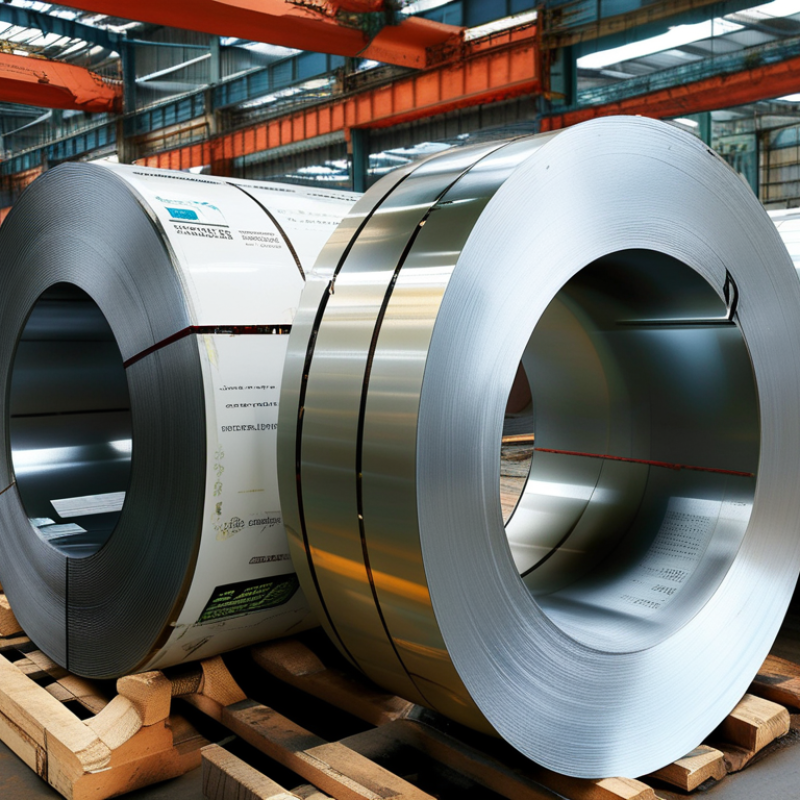
Electrical steel is a specialized material for reducing magnetic losses in electrical equipment. Its performance depends on type, grade, thickness, and processing quality. Grain-oriented electrical steel is mainly used in transformer cores. Its grains align with the rolling direction, improving magnetic efficiency. Non-grain-oriented electrical steel offers balanced magnetic properties in multiple directions. It suits motors, generators, compressors, and many rotating machines.
Grades are often compared through core loss, magnetic induction, and thickness. Lower core loss can improve efficiency, but it may increase material cost. Common thicknesses include 0.23, 0.27, and 0.30 millimeters. Actual availability can vary among Chinese suppliers. Buyers should request mill test certificates, coating details, dimensional tolerances, and production samples. A catalog number is not enough. Cutting, punching, stacking, and stress relief can change final performance. This point is easy to underestimate.
Transformer designers usually prioritize low loss and strong permeability. Motor manufacturers may focus on high-frequency performance and punchability. Electrical steel also appears in inductors, reactors, relays, and traction equipment. For global purchasing, compare grades under the same testing standard. Confirm whether reported losses apply to the delivered thickness. Ask for data at the intended frequency and magnetic flux density. Small differences on paper may become visible as heat, noise, or reduced efficiency. No grade is perfect. Selection should match the core design, operating conditions, and manufacturing process.
China’s electrical steel supplier market is organized in layers, not around one simple directory. Large mills produce grain-oriented and non-grain-oriented grades, while regional processors cut, slit, and package coils for specific transformer or motor designs. Trading companies often connect overseas buyers with several production sources.
This structure gives buyers flexibility. A transformer manufacturer may request 0.23 mm grain-oriented steel, controlled core loss, and burr limits below a defined level. A motor producer may need non-grain-oriented steel in wider coils, with stable magnetic performance during stamping. Experienced suppliers should provide mill certificates, inspection records, coating details, and traceable heat numbers. Samples matter.
Export capability forms another layer. Some suppliers manage containers, moisture protection, and port documentation directly. Others depend on forwarding partners, which can create communication gaps. Buyers should compare actual production capacity, not only website claims. Factory audits, third-party testing, and small trial orders can reveal differences in flatness, edge quality, and packaging strength.
The market is efficient, but not perfectly transparent. Some quotations look attractive until slitting fees, inland transport, or testing costs appear. Delivery estimates can also be too optimistic during peak seasons. A careful buyer should document every technical requirement and ask how nonconforming material is handled. That question is often more revealing than a polished presentation.
The leading ten Chinese electrical steel suppliers serve different purchasing needs. One focuses on grain-oriented sheets for transformer cores. Another specializes in non-oriented steel for motors, generators, and compact appliances. Several suppliers offer slit coils, cut sheets, and customized widths. Their production lines commonly include annealing, coating, leveling, and precision cutting equipment.
In practical sourcing reviews, buyers should examine thickness tolerance, core loss data, magnetic induction, and surface insulation quality. Supplier three provides thinner gauges for energy-efficient motors, while supplier four handles wider coils for large transformer projects. Supplier five supports small trial orders, which helps new buyers test stamping performance. Supplier six is better suited to high-volume contracts and scheduled container loading. Supplier seven offers customized burr control. Supplier eight emphasizes stable coating thickness. Supplier nine provides laboratory testing before shipment. Supplier ten combines domestic processing with export documentation support.
Factory audits remain important. Product catalogs can look stronger than actual production records. Ask for recent inspection reports, sample measurements, and batch traceability documents. IEC and ASTM references may guide specifications, but buyers should confirm the exact grade and testing method. A useful comparison includes payment terms, packaging strength, loading photographs, and response speed. Small details matter, especially when coils arrive with edge damage or moisture marks.
A ranking is never permanent. Market capacity changes. Some claimed tolerances still require factory confirmation.
China Top 10 Electrical Steel Suppliers for Global Buyers
Quality should lead any shortlist of China’s top electrical steel suppliers. Buyers should verify grain-oriented and non-oriented grades against IEC 60404 requirements. Important records include mill certificates, dimensional reports, and magnetic-loss test results. ISO 9001 supports process control, while ISO 14001 and ISO 45001 indicate broader management practices. However, certificates alone do not prove stable production. A supplier may pass one audit and still struggle with batch consistency.
The International Energy Agency reported that annual global grid investment must exceed 600 billion dollars by 2030. This pressure increases demand for efficient transformer cores and motor laminations. The U.S. Department of Energy also identifies improved electrical steel as a route to reduce motor energy losses. Therefore, buyers should examine core loss, permeability, surface insulation, thickness tolerance, and slitting quality. Production details matter. Look for continuous annealing lines, laser scribing capability, clean storage areas, and calibrated testing equipment. Some suppliers provide impressive samples, but repeat orders can reveal weaknesses.
Tips: Request three recent batch reports, not one. Ask for independent testing when projects are critical. Compare measured values with the supplier’s specification, not only catalogue data. Visit the plant if possible, and inspect coil labeling, edge condition, and packaging. I would also ask how rejected material is handled. This question feels basic, yet it often exposes gaps in traceability. A useful shortlist should balance certification, manufacturing depth, delivery records, and honest technical communication.
China Top 10 Electrical Steel Suppliers for Global Buyers
How Global Buyers Can Evaluate and Select a Supplier
Choosing an electrical steel supplier requires more than comparing quotations. Confirm the steel grade, thickness range, core loss, permeability, and coating performance. Ask for recent mill certificates, not only standard product brochures. Each certificate should match the heat number, production date, and delivered coil. Small details matter.
Request samples from the same production route used for commercial orders. Test them through an independent laboratory when transformer efficiency is critical. Check slitting accuracy, burr height, coil weight, packaging, and moisture protection. A reliable supplier explains its inspection process clearly. It should also provide traceability from raw material to shipment. Production capacity matters, but stable quality matters more.
Evaluate lead times under normal and peak conditions. Ask how the supplier handles rejected coils, delayed vessels, and specification changes. Visit the facility if possible, or arrange a documented remote audit. A polished certificate can still hide inconsistent processing. Some buyers focus too heavily on price and regret weak after-sales support. Others demand excessive documentation without checking actual samples. That approach also wastes time. Use a written scorecard covering quality, capacity, communication, testing, and commercial terms. Review it again after the trial order.
Buyer comparison table: The figures below reflect commonly traded Chinese electrical-steel specifications, export practices, and technical evaluation criteria. Supplier identities are intentionally anonymized. Buyers should verify current production capability, certificates, test reports, and commercial terms before placing an order.
Scoring guide: 5 = strongest evidence or capability; 1 = limited evidence or capability. Product availability varies by mill, service center, grade, thickness, and order quantity.
| Rank Anonymous profile |
Primary product focus | Typical thickness (mm) |
Typical width (mm) |
Applicable standards | Typical order form | Common processing services | Indicative export lead time | Documentation readiness (1–5) |
Customization capability (1–5) |
Buyer verification priority |
|---|---|---|---|---|---|---|---|---|---|---|
| 01 | Grain-oriented electrical steel for transformer cores | 0.18–0.35 | 700–1,250 | IEC 60404-8-7; EN 10107; ASTM A876 | Coils, slit coils, cut sheets | Slitting, step-lap cutting, burr control | 4–8 weeks | 5 | 5 | Confirm core-loss data at the ordered grade and frequency |
| 02 | Non-oriented electrical steel for motors and generators | 0.20–0.65 | 800–1,250 | IEC 60404-8-4; EN 10106; ASTM A677 | Coils, slit coils, laminations | Slitting, blanking, stamping support | 3–7 weeks | 5 | 4 | Check specific total loss, permeability, and stacking factor |
| 03 | Medium- and high-efficiency non-oriented grades | 0.27–0.50 | 600–1,250 | IEC 60404-8-4; EN 10106 | Coils and slit coils | Slitting, recoiling, protective packing | 3–6 weeks | 4 | 4 | Request recent third-party test results and surface-insulation data |
| 04 | Transformer-grade grain-oriented steel | 0.23–0.30 | 750–1,100 | EN 10107; IEC 60404-8-7 | Coils and cut-to-length sheets | Cutting, step-lap, edge conditioning | 4–7 weeks | 4 | 5 | Validate magnetic induction, loss, flatness, and burr limits |
| 05 | Electrical steel for small motors, pumps, and compressors | 0.35–0.65 | 500–1,250 | IEC 60404-8-4; EN 10106; ASTM A677 | Slit coils and punched laminations | Slitting, stamping, deburring | 3–6 weeks | 4 | 4 | Confirm die capability, dimensional tolerances, and burr height |
| 06 | High-permeability grain-oriented steel | 0.20–0.30 | 700–1,050 | EN 10107; IEC 60404-8-7 | Coils, slit coils, core kits | Domain-refining support, step-lap cutting | 5–9 weeks | 4 | 4 | Require orientation-loss data and production-lot traceability |
| 07 | General-purpose non-oriented electrical steel | 0.35–0.65 | 600–1,250 | IEC 60404-8-4; EN 10106 | Coils and slit coils | Slitting, leveling, export packing | 2–5 weeks | 4 | 3 | Compare minimum order quantity, yield, and actual loss values |
| 08 | Motor-lamination material and precision slit strip | 0.20–0.50 | 20–1,250 | IEC 60404-8-4; EN 10106 | Precision slit coils and laminations | Narrow slitting, stamping, batch sorting | 3–7 weeks | 3 | 5 | Inspect slit-edge quality, width tolerance, and packaging method |
| 09 | Electrical steel service and distribution profile | 0.23–0.65 | 50–1,250 | IEC 60404-8-4; EN 10106; EN 10107 | Stock coils, slit coils, cut sheets | Slitting, cutting, consolidation, warehousing | 1–4 weeks for stock items | 3 | 3 | Verify original mill certificates and material identity |
| 10 | Specialty electrical steel for prototypes and low-volume projects | 0.20–0.65 | 50–1,250 | IEC 60404-8-4; EN 10106; EN 10107 | Small coils, sheets, prototype laminations | Custom slitting, sampling, prototype punching | 4–10 weeks | 3 | 5 | Confirm minimum order quantity, tooling ownership, and repeatability |
Note: EN 10106 is commonly used for non-oriented electrical steel, while EN 10107 is commonly used for grain-oriented electrical steel. The actual commercial specification must be agreed in the purchase contract and confirmed against the applicable edition of the standard.
Electrical steel reduces magnetic losses in electrical equipment. It is used in transformers, motors, generators, inductors, relays, and traction equipment. Lower losses can reduce heat and improve efficiency.
Grain-oriented steel aligns its grains with the rolling direction. It mainly suits transformer cores. Non-grain-oriented steel provides balanced magnetic performance in several directions. It suits motors and rotating machines.
Common thicknesses include 0.23, 0.27, and 0.30 millimeters. Actual availability varies among suppliers. Always confirm the delivered thickness.
Compare core loss, magnetic induction, permeability, thickness, and coating performance. Check results under the same testing standard. Reported losses may change with frequency and flux density.
Request mill test certificates, coating details, dimensional tolerances, inspection records, and traceable heat numbers. The certificate should match the delivered coil. A catalog number is not enough.
Samples reveal flatness, edge quality, burr height, and coating consistency. Ask for samples from the same production route as commercial orders. Paper data can look better than reality.
Review actual capacity, lead times, packaging, moisture protection, and port documentation. Ask how the supplier handles rejected coils and delayed vessels. Trial orders often reveal more.
The quote may exclude slitting fees, inland transport, testing, or special packaging. Peak seasons can also extend delivery times. Cheap at first.
Cutting, punching, stacking, and stress relief can change final magnetic performance. Poor processing may increase losses, noise, or heat. This risk is easy to underestimate.
Use a written scorecard covering quality, testing, capacity, communication, and commercial terms. Check samples before accepting large orders. Review the scorecard after the trial order.
This guide provides global buyers with a practical overview of Electrical Steel, including its main types, grades, magnetic properties, and applications in transformers, motors, generators, and energy-efficient power equipment. It explains how China’s supplier market is structured, from raw material processing and steel production to precision slitting, coating, and international distribution. The article also presents profiles of ten representative Chinese suppliers without focusing on brand promotion, highlighting their product scope, manufacturing strengths, export capabilities, and areas of specialization.
In addition, the guide discusses important quality standards, certifications, testing procedures, production technology, and customization capabilities that buyers should review before placing an order. It concludes with a clear supplier evaluation framework covering material performance, dimensional accuracy, delivery reliability, technical support, pricing transparency, communication, and compliance with destination-market requirements. By using these criteria, international purchasers can compare suppliers more effectively, reduce sourcing risks, and select Electrical Steel products that match their technical, commercial, and long-term project needs.
