
SMSTEEL
Buying Electrical Galvanized Steel is not simply a price comparison. It is a decision about conductivity, corrosion resistance, dimensional accuracy, and service life. A bright zinc surface may look convincing. It can still hide poor adhesion, uneven coating thickness, or unsuitable base steel. That is where careful buyers often need to slow down.
Dr. Gregory Zhang, a recognized galvanizing researcher, offers a useful principle: “The coating’s performance depends on the steel surface, the zinc layer, and the environment.” This idea should guide every purchase. Check the steel grade and thickness. Confirm the zinc coating mass. Review the manufacturer’s inspection records. Ask whether the material suits indoor panels, outdoor enclosures, grounding components, or humid industrial areas. Electrical Galvanized Steel is commonly produced with a controlled, uniform zinc layer, but uniformity does not guarantee the right performance for every application.
Look closely.
Inspect edges, corners, holes, and cut surfaces. These areas often reveal handling damage first. Request test reports that identify coating thickness, mechanical properties, and applicable standards. Compare samples under natural light, not only polished product photographs. Packaging also matters because trapped moisture can create white corrosion during storage and transport. I have seen buyers focus on a low unit price and overlook rewelding, replacement, and installation delays. That mistake is easy to repeat. A stronger buying process connects technical evidence with the actual working environment. The perfect specification may still fail if storage conditions are ignored. Some decisions remain uncertain, so document assumptions before placing the order.
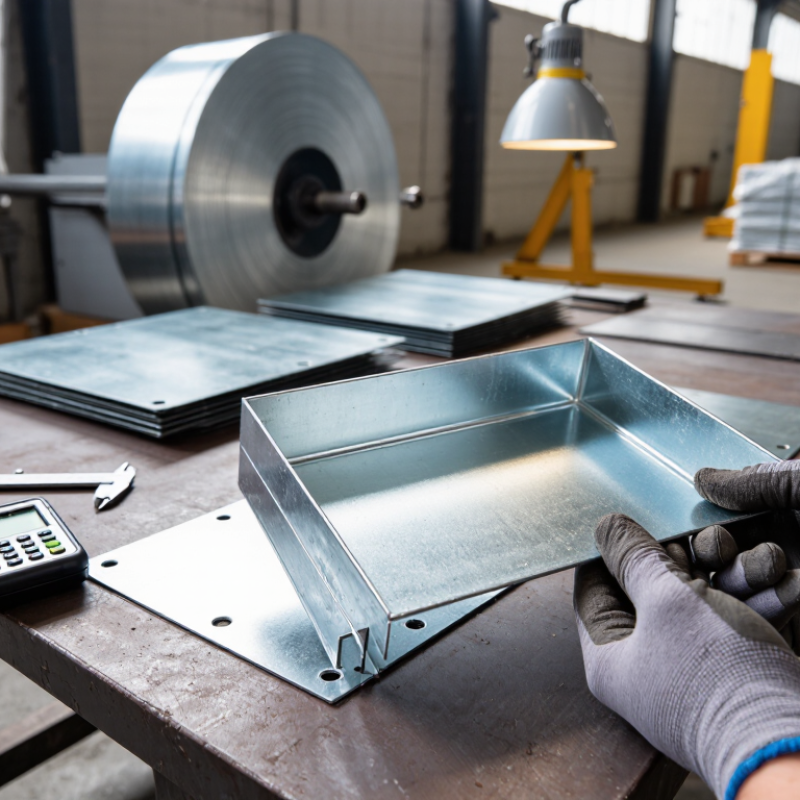
Electrical galvanized steel is carbon steel coated with zinc through an electrolytic process. The coating is usually thinner and more uniform than hot-dip galvanizing. This makes it useful for appliance panels, light automotive parts, ductwork, cable trays, and indoor enclosures. Its smooth surface also supports painting and precise forming. However, it is not automatically suitable for every outdoor application.
Tip 7: Review storage conditions after delivery. Keep sheets dry, separated, and protected from condensation. Stacked wet steel can develop white rust surprisingly quickly.
I have seen clean-looking material fail because moisture stayed between tightly packed sheets. That mistake is easy to repeat. For critical projects, request a sample, measure dimensions, and test forming behavior before approving the full purchase.
Before selecting electrical galvanized steel, define the project conditions clearly. Record the required thickness, width, length, forming method, and expected service life. Tip 1: Measure twice. Small dimensional errors can create costly installation delays. Tip 2: Identify the electrical application, such as cable trays, enclosures, supports, or grounding components. Each use may require different strength and coating performance.
The surrounding environment matters just as much. Tip 3: Note humidity, salt exposure, chemicals, temperature changes, and indoor dust. Galvanized zinc protects steel, but it is not equally effective in every atmosphere. Tip 4: Confirm the required coating designation and test method. Ask for inspection records, coating measurements, tensile data, and material certificates. Tip 5: Check compatibility with fasteners, bends, welds, and nearby metals. Contact between dissimilar metals can accelerate corrosion.
Supplier discussions should follow the project drawing, not replace it. Tip 6: Share loading details, bend radii, hole patterns, and delivery tolerances before requesting a quotation. Tip 7: Compare total cost, including cutting, forming, inspection, transport, and replacement risk. The lowest unit price can hide weak documentation or poor consistency. A clean surface is not enough. Review edges, scratches, coating uniformity, and storage conditions. One overlooked requirement can affect the whole assembly. Recheck the specification before approval; practical projects often reveal missing details late.
Before choosing a product: Define the service environment, required corrosion protection, sheet thickness, forming needs, and applicable coating standard. The chart shows ASTM A653/A653M G coating designation values in ounces per square foot, total for both sides. These are not a universal recommendation; if you need electrogalvanized steel, confirm the applicable standard and coating-mass convention for that product.
Before comparing quotes, check what the steel grade is intended to handle. The grade affects strength, formability, and suitability for bending or stamping; zinc coating cannot compensate for the wrong base steel. Ask for the grade designation and its governing standard, including the edition. A material certificate can help verify the supplied batch, though paperwork should match the actual order. Small details matter. For formed parts, inspect sample bends for cracking, especially around tight corners.
Electrogalvanized steel has a smooth, relatively controlled zinc layer, but its coating is often thinner than hot-dip galvanized coatings. Confirm coating mass or thickness on both sides, rather than relying on “zinc coated” alone. Then consider the service environment: indoor cabinets differ greatly from damp workshops, coastal air, or frequent condensation. Not always obvious. Edges, scratches, and cut holes can corrode sooner because the protective layer is disrupted. Ask for corrosion-test results when relevant, but do not treat a salt-spray test as a direct prediction of years in service. Compare test methods and exposure conditions, and inspect the finished part’s edges and coating consistency before accepting a large shipment.
| Tip | What to Evaluate | Buyer’s Check | Why It Matters | Useful Purchase Record |
|---|---|---|---|---|
| 1 | Specify the steel grade | State the applicable product standard, grade, thickness, and required mechanical properties. For example, ASTM A1008/A1008M covers cold-rolled carbon steel sheet, with requirements depending on the specified grade. | Strength, formability, and surface requirements vary by grade. “Electrical galvanized” describes the coating process, not the steel’s mechanical properties. | Purchase specification and material test certificate identifying the standard and grade. |
| 2 | Confirm thickness and tolerances | Specify nominal thickness, width, length or coil dimensions, and acceptable dimensional tolerances. Clarify whether thickness is measured on the coated product. | Thickness variation can affect part fit, forming, weight, and downstream processing. | Order dimensions, tolerance requirements, and agreed inspection method. |
| 3 | Define the zinc coating | Identify the governing coating specification and state the required coating designation or mass. Confirm whether the stated value applies to one side or both sides and whether a differential coating is acceptable. | Electrogalvanized coatings are applied by electrodeposition. Coating designations and reporting conventions depend on the applicable specification, so a generic “zinc-coated” description is insufficient. | Applicable coating standard, designation, side-specific requirements, and certificate or test results. |
| 4 | Match corrosion protection to the environment | Describe the actual exposure: dry indoor use, condensation, frequent washing, outdoor weather, or contact with salts or chemicals. Ask for performance evidence relevant to that exposure. | Corrosion depends on coating amount, environment, design, and maintenance. Electrogalvanized sheet should not be assumed to provide the same protection as a heavier hot-dip coating or a validated paint system. | Service environment, expected protection system, and any project-specific corrosion requirements. |
| 5 | Review surface treatment and finish | Specify the required surface finish and any passivation, oiling, or other treatment. Confirm compatibility with painting, adhesive bonding, forming, and storage conditions. | Surface treatments can affect paint adhesion, weldability, and processing. The right choice depends on the fabrication route and end use. | Surface-finish description, treatment requirements, and compatibility confirmation for downstream processes. |
| 6 | Check forming and fabrication needs | Provide the part’s forming method, bend requirements, joining method, and any restrictions on coating damage. Request samples or trial runs for demanding parts. | Grade, thickness, surface condition, and coating can influence forming and joining results. Cut edges and damaged areas may have less zinc protection than intact coated surfaces. | Approved sample, forming criteria, joining requirements, and agreed limits for visible defects. |
| 7 | Verify documentation and inspect the lot | Review the material certificate for grade, dimensions, and coating details. Agree on sampling, visual inspection, packaging, and traceability before shipment. | Clear acceptance criteria help detect mismatched material, coating irregularities, handling damage, or moisture-related storage problems. Salt-spray results are comparative test data, not a direct prediction of years in service. | Certificate, lot identification, inspection plan, packaging requirements, and any agreed test reports. |
7 Tips for Buying Electrical Galvanized Steel
Specify thickness, width, length, flatness, and edge condition before comparing prices. For coils, include inside diameter and acceptable weight range. Confirm whether dimensions refer to the steel base or finished coated sheet. Small details matter. A sample may look right while the delivered coil falls outside your tolerance.
Name the required coating standard in the purchase specification. ASTM A879/A879M covers steel sheet zinc-coated by the electrolytic process; EN 10152 covers electrolytically zinc-coated cold-rolled flat products. State the coating mass required on each surface, rather than relying on a general “electrogalvanized” description. Request a coil-specific inspection certificate, with grade, dimensions, coating designation, and test results traceable to the supplied material. Check that the certificate matches the coil ID.
Inspect both faces under consistent lighting for bare spots, scratches, stains, and uneven appearance. Confirm coating mass and thickness through documented test methods, not visual judgment alone.
The NACE IMPACT study estimated global corrosion costs at US$2.5 trillion, or 3.4% of global GDP, using 2013 data.
That estimate covers many industries, but it underlines why coating verification matters. A clean surface is reassuring, not proof; I would still review the records and agree on inspection criteria before shipment.
7 Tips for Buying Electrical Galvanized Steel
Tip 1: Check supplier reliability before comparing prices. Ask for recent inspection records, coating specifications, and traceable batch documents. A clear answer matters. If details are vague, request a sample or written clarification. Small differences matter. Confirm the steel grade and zinc coating weight match your application, not just the product description.
Tip 2: Compare the full delivered cost. Include cutting, packing, freight, unloading, and any minimum-order fees. A low price can change quickly. Ask whether the quote covers protective packaging; wet marks or damaged edges may create extra handling. I would also check how rejected material is reported and replaced. That point is easy to overlook.
Tip 3: Put delivery terms in writing. Confirm the dispatch date, estimated transit time, delivery location, and who handles unloading. Ask how delays are communicated and whether partial shipments are allowed. Timing is part of quality. Leave room for inspection after arrival, especially when the steel is needed for a scheduled production run. A tight deadline can make even a reliable supplier seem unreliable if expectations were never clear.
It is carbon steel coated with zinc through an electrolytic process. The coating is usually thin and even.
It suits appliance panels, light automotive parts, ductwork, cable trays, and indoor enclosures. Its smooth surface also supports painting and precise forming.
Not automatically. Match the zinc coating to the environment, since humid or coastal conditions need more protection than dry interiors.
Confirm the base steel grade and coating specifications. Forming and bending needs vary. Check coating thickness at several points, not just one.
Look for scratches, bare spots, stains, and damaged edges. Keep sheets dry and separated. Small details matter.
Protect the sheets from condensation and moisture between stacked layers. White rust can appear quickly. I still find this easy to overlook.
Ask for test certificates, traceable batch records, inspection details, and a sample if specifications are unclear. A polished claim is not enough.
Include cutting, packing, freight, unloading, and minimum-order fees in the total cost. Confirm dispatch dates, transit estimates, delivery location, and unloading responsibilities in writing.
Review forming and welding needs early. Zinc fumes require controlled ventilation and suitable protective procedures. Test a sample before approving a large order.
Buying Electrical Galvanized Steel starts with understanding how its zinc coating and steel base suit the intended application, such as indoor components or products that need a smooth, conductive surface. Before choosing a product, define the project’s requirements, including the operating environment, expected service life, fabrication methods, and performance needs. These details help narrow the appropriate steel grade and coating thickness, while allowing buyers to assess whether the material offers suitable corrosion resistance.
Next, verify dimensions, applicable technical standards, certifications, and quality records so the product matches the project specifications. Compare suppliers based on consistent quality, clear communication, dependable production capacity, and realistic delivery schedules. Rather than focusing only on the quoted price, consider the total cost, including transport, inspection, processing, and possible delays. A careful evaluation of these factors can help buyers select material that meets technical needs and supports a reliable purchasing decision.
