 SMSTEEL
Galvanized Sheet Metal is used in roofing, ductwork, automotive parts, and equipment enclosures. Its zinc coating helps protect steel from corrosion, but performance depends on more than the coating alone. Buyers also need to consider sheet thickness, coating specification, forming requirements, delivery consistency, and technical support. A low price can look attractive. It may not tell the whole story.
Thomas Langill, a technical expert associated with the American Galvanizers Association, has explained the protective role of zinc coatings in steel. The following is a paraphrase, not a verbatim quotation: “Choose a coating to suit the steel, the fabrication process, and the conditions it will face.” That is a useful lens for comparing suppliers. A roofing contractor may prioritize dependable coil supply and finish consistency; a fabricator making tight bends may care more about formability and coating adhesion. Details matter.
This guide reviews ten worldwide suppliers and the factors that can help buyers assess them, including product range, quality systems, service reach, and available technical documentation. Supplier capabilities and lead times can vary by region and order size, so confirm current details directly. No supplier is perfect. And a ranked list cannot replace a sample inspection, a clear specification, or a careful conversation with the mill.
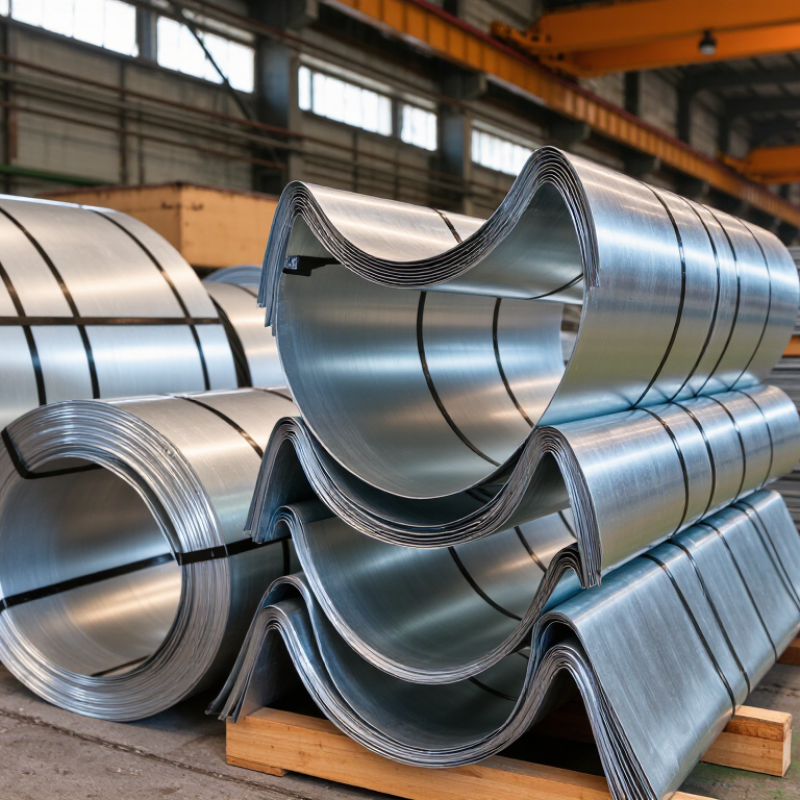
Galvanized sheet metal is steel protected by a zinc coating. The zinc forms a barrier against moisture and can help protect exposed areas through sacrificial action. In practical terms, a cut edge may still resist corrosion, though it is not invulnerable. Salt, standing water, and damaged coatings can shorten service life.
Coatings differ in how they are applied and how much zinc they contain. Hot-dip galvanized sheet passes through molten zinc, creating a durable coating suited to many building and fabrication uses. Electrogalvanized sheet receives zinc through an electrical process and often has a smoother, more uniform appearance. Coating designations and test methods vary, so check the supplier’s specification rather than relying on a finish description alone. Small detail. It matters.
Common forms include flat sheets, coils, slit strips, and corrugated panels. A flat sheet may suit a folded duct or enclosure; corrugations add stiffness to roofing and cladding. During cutting or bending, tight corners can stress the coating, especially when the sheet is poorly matched to the forming task. I would not choose by appearance alone. Compare thickness, coating mass, surface finish, and intended exposure, then confirm that the material can handle the planned fabrication. Even good specifications leave room for judgment.
Supplier-neutral reference: the entries below compare common galvanized sheet specifications and forms; they are not a ranking of named companies.
| # | Specification or product | Common form | Coating or standard detail | Typical notes and uses |
|---|---|---|---|---|
| 1 | Hot-dip galvanized commercial steel sheet | Coils and cut sheets | Zinc coating applied by continuous hot-dip processing; ASTM A653/A653M covers galvanized sheet products in the United States. | A general-purpose product used for formed parts, panels, and building components. Confirm grade, thickness, coating, and surface requirements. |
| 2 | ASTM G30 coating designation | Coil or sheet | Nominal zinc coating mass of about 90 g/m² total for both sides. | A lighter coating designation than G60 or G90. Suitability depends on the environment, forming, and specified service life. |
| 3 | ASTM G60 coating designation | Coil or sheet | Nominal zinc coating mass of about 180 g/m² total for both sides. | Often specified for general building and fabrication uses; actual corrosion performance varies with exposure and maintenance. |
| 4 | ASTM G90 coating designation | Coil or sheet | Nominal zinc coating mass of 0.90 oz/ft², approximately 275 g/m² total for both sides. | A commonly specified coating mass. The designation describes coating mass, not a guaranteed service life. |
| 5 | EN 10346 Z100 | Coil and sheet | Zinc coating designation with a nominal coating mass of 100 g/m² total for both sides. | European-standard designation for continuously hot-dip-coated flat steel products. Check the ordered standard edition and product grade. |
| 6 | EN 10346 Z275 | Coil and sheet | Zinc coating designation with a nominal coating mass of 275 g/m² total for both sides. | Frequently selected where a heavier zinc coating is specified. Z275 and ASTM G90 have similar nominal coating masses, but are different standards. |
| 7 | Galvannealed sheet | Coils and cut sheets | A hot-dip zinc coating that is subsequently heat-treated to form a zinc-iron alloy coating; ASTM A653 includes galvannealed coating designations. | The alloyed surface is commonly used where paintability and resistance to spot-welding wear are important. |
| 8 | Slit galvanized coil | Narrow-width coil | Produced by slitting wider galvanized coil; the base coating specification remains that of the parent coil. | Used by roll-formers and fabricators. Specify slit width, thickness, edge condition, coil weight, and coating requirement. |
| 9 | Corrugated galvanized sheet | Profiled roofing or cladding sheets | Flat galvanized sheet formed into a corrugated profile; coating and base-metal specifications should be stated separately. | Common in roofing, wall cladding, and agricultural buildings. Profile, sheet length, thickness, and fastener details affect performance. |
| 10 | Cut-to-length galvanized sheet | Flat rectangular sheets | Cut from galvanized coil to ordered dimensions; coating type and mass are determined by the coil specification. | Useful for press work and general fabrication. Check flatness, cut-edge requirements, dimensional tolerances, and protective packaging. |
Coating-mass figures are nominal total values for both sheet surfaces; product tolerances and test methods are governed by the applicable standard and purchase specification.
It is steel covered with zinc. Zinc blocks moisture and can protect exposed areas through sacrificial action. Not invulnerable.
Hot-dip sheets pass through molten zinc and usually have durable coatings. Electrogalvanized sheets receive zinc electrically and often look smoother. Check the specification.
Common forms include flat sheets, coils, slit strips, and corrugated panels. Corrugations add stiffness to roofing and cladding.
Steel strip is cleaned, heated, and passed through molten zinc. Air knives control excess zinc before the strip cools.
They measure coating thickness or mass across several points. They also look for bare spots, blisters, rough patches, scratches, and uneven dimensions.
No. Shine can look reassuring, but it proves little by itself. I still catch myself trusting it too quickly.
Salt, standing water, and damaged coatings can speed corrosion. Tight bends may also stress the zinc layer.
Compare steel grade, thickness, coating mass, finish, test methods, and intended exposure. Request current certificates and confirm tolerances in writing. Small details matter.
Zinc may protect nearby exposed steel through sacrificial action, but this is not guaranteed. Check sample edges before approving a large shipment.
This article explains what Galvanized Sheet Metal is, how protective coatings help resist corrosion, and the common forms used across construction, manufacturing, and other industries. It outlines the main stages of production, from preparing the steel to applying a zinc coating, and describes quality checks that may assess coating consistency, dimensions, surface condition, and mechanical performance. It also offers a broad overview of the global market, including the role of major supply regions and the factors that shape availability.
The article profiles ten significant suppliers worldwide without focusing on any single brand. It provides a practical framework for comparing potential suppliers by product range, production capacity, quality control, delivery reliability, technical support, and customer service. Together, these sections help readers understand the material and make more informed supplier comparisons based on their project requirements.
