
SMSTEEL
Choosing the top Galvanized Steel suppliers requires more than comparing prices on a spreadsheet. Global buyers must examine coating weight, base-metal grade, dimensions, surface finish, and delivery reliability. A bright coil may look impressive, yet its zinc layer could fail a project’s exposure requirements. Small details matter.
Corrosion scientist Mars G. Fontana wrote, “Corrosion can be defined as the destructive attack of a metal by chemical or electrochemical reaction with its environment.” His statement explains why supplier evaluation must begin with service conditions. Coastal air, industrial humidity, and frequent temperature changes can quickly expose weak specifications.
Reliable suppliers provide mill test certificates, coating-thickness records, batch numbers, and clear traceability. They should also explain whether products follow ASTM A653, ASTM A123, EN 10346, or ISO 1461 requirements. These standards are not interchangeable in every application. Buyers need confirmation, not assumptions.
Look for evidence of production experience. Factory audits, independent inspections, sample testing, and consistent export packaging can reveal more than polished brochures. Ask how coils are protected against moisture during ocean transport. Check the wrapping, edge protection, and loading photographs.
No supplier is perfect. Delays happen. Specifications can be misunderstood. Even experienced buyers occasionally focus too heavily on unit price. That mistake can create expensive rework later.
This guide compares leading Galvanized Steel suppliers through product quality, certifications, capacity, communication, customization, and logistics. It also considers practical buying concerns, including minimum order quantities and after-sales support. The strongest supplier is not always the cheapest. It is the one that delivers measurable quality, honest documentation, and dependable performance.
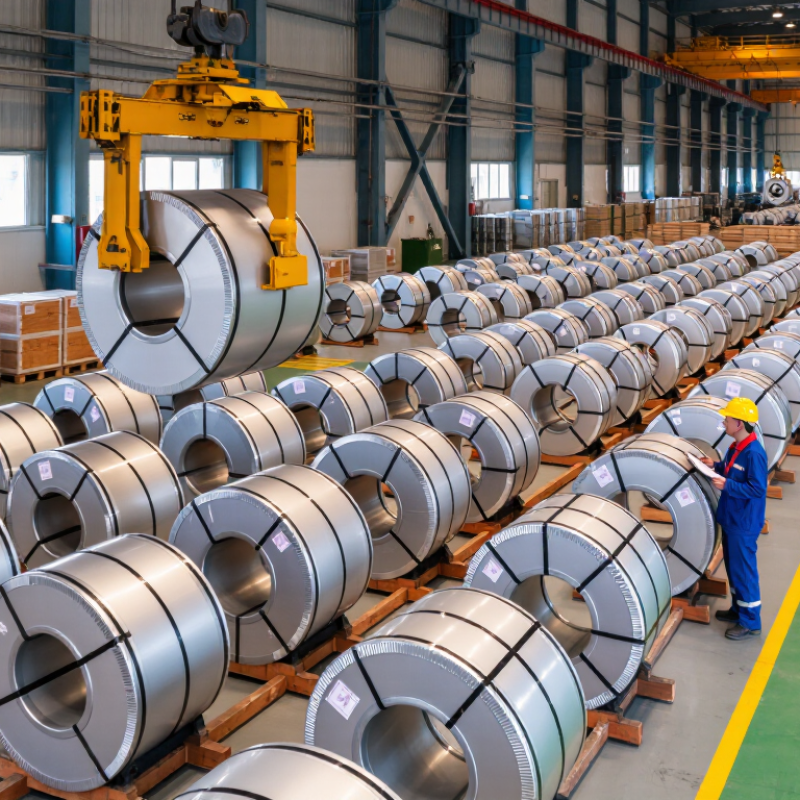
A reliable galvanized steel supplier proves consistency before discussing price. The World Steel Association reported approximately 1.89 billion tonnes of crude steel production in 2023. That scale makes supplier selection difficult, especially when mill origin, coating quality, and delivery records remain unclear. Buyers should request heat numbers, mill test certificates, coating-mass results, and dimensional inspection records. Documents matter. Physical evidence matters more.
For roofing and construction orders, the supplier should identify the steel grade, zinc coating designation, surface finish, and tolerances clearly. ASTM A653 and ISO 1461 provide useful reference points for coated steel requirements, but certificates should match the actual shipment. A dependable exporter also explains how samples were tested, which laboratory performed the work, and how nonconforming coils are handled. Vague answers deserve attention.
Logistics reveal another layer of reliability. The supplier should provide packing photographs, coil weight limits, moisture protection details, and realistic loading dates. UN Comtrade data shows how widely traded iron and steel products move across international markets, yet trade volume does not guarantee quality. A large exporter may still mishandle one container. Experience teaches caution. I would compare three recent deliveries, not one impressive case study. Even a well-designed checklist can miss corrosion caused by poor port storage, so buyers should review claims history and inspect packaging before shipment.
Consistent zinc coating is one of the most important technical indicators when evaluating galvanized steel suppliers. The chart shows ASTM A653/A653M coating designations and their approximate total zinc coating mass on both sides of the sheet. Higher coating mass generally provides greater corrosion protection, but buyers should also verify dimensional tolerances, mechanical properties, inspection reports, traceability, and delivery consistency.
Reference: ASTM A653/A653M coating designations. Values are nominal total coating masses converted from oz/ft² to g/m².
Global buyers should compare galvanized steel by substrate, coating mass, and end use. The World Steel Association reported 1.89 billion tonnes of crude steel production in 2023. That scale supports broad international availability, but specifications still vary by region.
Commercial-quality sheets suit roofing, ducting, and light fabrication.
Structural grades offer higher yield strength for frames, panels, and transport equipment.
ASTM A653 commonly uses G30 to G235 coating designations, measured in ounces per square foot. EN 10346 lists grades such as DX51D for forming and S350GD for stronger structural work. European buyers may also specify Z100 to Z600 coating masses in grams per square metre. JIS G3302 includes widely traded grades such as SGCC.
These systems are not directly interchangeable without checking coating definitions and test methods. A small wording error can cause a costly mismatch.
Tips:
Request the mill test certificate, coating mass, yield strength, elongation, coil width, and passivation details. Confirm whether the quoted coating value applies to one side or both sides. For humid or coastal service, do not select zinc mass by price alone. The World Steel Association’s 2024 industry data shows steel remains a massive global material stream, yet supply volume does not guarantee identical quality. In practice, buyers should approve a sample, inspect surface marks, and verify the standard before loading. Supplier comparisons need this discipline.
Top Galvanized Steel Suppliers for Global Buyers?
When global buyers compare galvanized steel suppliers, price is only the opening question. A reliable evaluation starts with traceable steel chemistry, coating records, and production controls. The World Steel Association reported 1.89 billion tonnes of crude steel production in 2023. This shows intense global competition. Scale alone proves little. Ask for heat numbers, mill certificates, coating mass, and inspection dates. Blurred documents should raise questions.
Manufacturing quality must be checked against recognized standards. ASTM A123/A123M and ISO 1461 specify requirements for hot-dip galvanized structural products. For galvanized sheet, ASTM A653/A653M covers coating designations, steel grades, and surface quality. The International Zinc Association reports that galvanized coatings can protect steel for decades, often exceeding 50 years in suitable environments.
“Suitable” matters. Coastal salt, standing water, and damaged edges can shorten service life considerably. The NACE IMPACT study, referenced by AMPP, estimated global corrosion costs at about US$2.5 trillion annually, or 3.4% of global GDP. That figure is dated, but the risk remains substantial.
During pre-shipment inspection, measure coating thickness at multiple points, not one convenient area. Check bare spots, peeling, excessive zinc buildup, and dimensional distortion. Request independent test results for adhesion, tensile strength, and chemical composition when the application is critical. A supplier should explain rejected batches without defensiveness. I would also compare actual production samples with approved samples; small visual differences can reveal process drift. Perfect paperwork is not perfect quality. On-site evidence still matters.
Global buyers should judge galvanized steel suppliers beyond the lowest quoted price. Compare identical grades, dimensions, zinc coating weights, and tolerances. A quote for 1,000 tonnes may exclude packaging, inspection, or port charges. Request both FOB and CIF prices. Steel costs can change quickly, so confirm the quote’s validity period.
Certifications need practical checking. Ask for an ISO 9001 certificate, relevant product standards, and an EN 10204 3.1 mill test certificate when applicable. Verify the certificate number and issuing body. Confirm chemical composition, yield strength, coating mass, and inspection results. Paperwork alone is not enough. A supplier may hold a valid certificate, but the shipment can still miss the agreed coating thickness.
Shipping details often decide the real cost. Confirm loading ports, container or bulk-vessel options, seaworthy packaging, and document requirements before placing an order. A small coil may arrive with edge damage if wrapping is weak.
Lead times commonly depend on production slots, galvanizing capacity, and vessel schedules. Ask for separate dates for production, inspection, and dispatch. Build a buffer for holidays and port congestion. Cheap steel is not cheap when a delayed shipment stops fabrication. My own sourcing checklist would be stricter here, although even detailed planning cannot remove every delay.
Choosing the best galvanized steel supplier requires more than comparing prices. World Steel Association’s World Steel in Figures 2024 recorded 1,892 million tonnes of crude steel production in 2023. This scale creates wide quality differences. Request mill certificates, coating thickness results, and traceability records for every batch. Confirm the steel grade, dimensions, zinc coating class, and permitted tolerances before signing a purchase order.
Project conditions should guide your supplier choice. Coastal air, road salt, humidity, and industrial pollution can shorten coating life. ISO 1461 provides requirements for hot-dip galvanized coatings, but certification alone is not enough. Ask for recent inspection reports and sample testing. A reliable supplier should explain production lead times, packaging methods, damage claims, and replacement procedures clearly. I have found that vague answers usually become expensive delays. A low quotation can still be the wrong decision.
Tips: Compare at least three written quotations. Check whether prices include testing, inland transport, export packing, and documentation. Ask for a small sample before placing a large order. Measure coating thickness independently when the project is critical. Also, review the supplier’s delivery history, not only its website. Some procurement teams overlook communication quality, yet one unanswered technical question can stop an entire installation.
Request heat numbers, mill certificates, coating-mass results, and dimensional inspection records. The documents should match the actual shipment. Paperwork alone is not enough.
Confirm the steel grade, dimensions, zinc coating class, surface finish, and permitted tolerances. Write every requirement into the purchase order. Small omissions become costly.
Measure coating thickness at several points, including edges and central areas. Check for bare spots, peeling, heavy buildup, and distortion. One reading proves very little.
Coastal air, road salt, humidity, and industrial pollution can shorten coating life. Standing water creates additional risk. The site matters.
Review packing photographs, coil weight limits, moisture protection, and loading dates. Inspect wrapping for tears, dampness, or exposed steel. A dry-looking package may hide moisture.
Compare at least three written quotations with identical specifications. Check testing, inland transport, export packing, and documentation costs. The lowest price may exclude essential services.
Review several recent deliveries, not just one successful case. Check claims history, replacement procedures, and communication speed. One impressive project proves little.
Independent testing is sensible for critical projects. Check coating thickness, adhesion, tensile strength, and chemical composition when necessary. No checklist catches everything.
Ask for specific test methods, laboratory details, and rejected-batch procedures. Vague replies deserve careful review. I would pause the order.
Choosing a reliable Galvanized Steel supplier is essential for global buyers seeking consistent quality, competitive pricing, and dependable delivery. A trustworthy supplier should offer clearly specified products, stable manufacturing processes, strict quality control, and suitable grades for construction, infrastructure, automotive, energy, and general fabrication applications. Buyers should review coating thickness, steel strength, dimensions, surface condition, and compliance with recognized international standards before placing an order.
Successful global sourcing also depends on transparent pricing, production capacity, certifications, packaging, shipping arrangements, and realistic lead times. Buyers should compare suppliers based on technical capability, communication, inspection procedures, and their ability to provide customized specifications. Evaluating samples, test reports, factory experience, and after-sales support can help reduce quality and delivery risks. By balancing product performance, total purchasing cost, logistics reliability, and project requirements, companies can select a Galvanized Steel supplier that supports long-term procurement success and consistent project results.
