 SMSTEEL
SMSTEEL
SMSTEEL
When engineers ask, “What Is Lamination Steel Used For?”, they usually mean electrical steel formed into thin, insulated sheets. These sheets guide magnetic flux inside transformers, electric motors, generators, and selected inductive components. Lamination Steel is not simply ordinary steel cut into smaller pieces. Its magnetic properties support efficient energy conversion, while the thin layers limit unwanted electrical currents.
A transformer core may contain hundreds of stacked sheets, each separated by a very fine insulating coating. This layered structure reduces eddy-current losses when alternating magnetic fields change direction. In a motor, the laminated stator and rotor help convert electrical power into controlled rotation. You can see the principle in a workshop: stamped steel shapes are stacked tightly, then fitted around copper windings. Small imperfections in alignment can increase noise, heat, or energy loss.
Manufacturers generally choose grain-oriented steel for transformer cores and non-grain-oriented steel for rotating machinery. The correct grade depends on frequency, flux density, operating temperature, thickness, coating quality, and production method. Design decisions should rely on certified material data, testing, and the equipment manufacturer’s requirements. Not every application needs the thinnest sheet. Thinner material can reduce losses, but it may increase cost, handling difficulty, or manufacturing complexity. That trade-off deserves careful review. In practice, Lamination Steel helps engineers balance performance, durability, and efficiency rather than solving every magnetic problem alone. Its value becomes clearest when material selection, stamping accuracy, insulation, and core assembly work together.
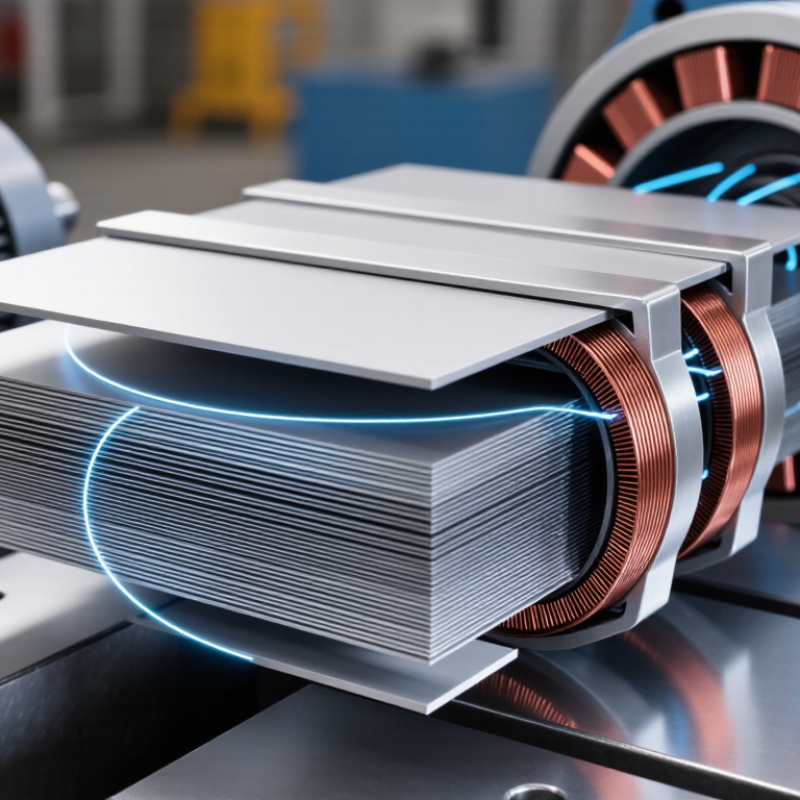
Lamination steel is thin electrical steel used to guide magnetic flux in motors, generators, and transformers. Its sheets are stacked rather than assembled as one solid core. Insulating coatings between layers limit circulating currents, which otherwise create heat and waste energy. Many grades contain silicon to improve magnetic performance. Grain-oriented steel suits transformer cores, while non-oriented steel is common in rotating machines.
Production begins with steelmaking and alloy control. The material is cast, hot-rolled, and pickled to remove surface scale. It is then cold-rolled into thin strip, annealed to develop magnetic properties, and often coated with insulation. Manufacturers cut or stamp the strip into shapes, then stack the pieces into a core. Small burrs or damaged coatings can weaken insulation, so handling matters. The process is precise, though not flawless. The International Energy Agency’s 2011 report, Energy-Efficiency Policy Opportunities for Electric Motor-Driven Systems, estimates that motor-driven systems use about 43–46% of global electricity. That figure explains why reducing core losses matters, even though lamination steel is only one part of system efficiency.
| Material or Process | Typical Form or Feature | Main Purpose | Common Uses |
|---|---|---|---|
| Non-oriented electrical steel | Thin silicon-steel sheets, commonly around 0.20–0.50 mm thick; magnetic properties are designed to be relatively similar in different in-plane directions. | Provides a low-loss magnetic path when the magnetic field changes direction during operation. | Motor and generator stators and rotors, small transformers, and other rotating electrical machines. |
| Grain-oriented electrical steel | Thin silicon-steel sheet with a preferred grain direction; commonly supplied in thicknesses around 0.23–0.35 mm. | Offers particularly favorable magnetic performance along the rolling direction. | Power and distribution transformer cores, where magnetic flux mainly follows a defined path. |
| Stamped laminations | Individual sheets are cut or punched into shapes such as motor teeth, slots, and core segments. | Creates the required core geometry while keeping the magnetic core divided into thin layers. | Motor and generator cores, including stator and rotor stacks. |
| Insulated lamination stack | Cut sheets are stacked with thin electrical insulation between adjacent layers; the stack may be joined or clamped. | Limits electrical current flowing between sheets, helping reduce eddy-current losses and heat in alternating magnetic fields. | Transformer, motor, and generator magnetic cores. |
| Transformer core assembly | Grain-oriented sheets are arranged so their rolling direction generally follows the principal magnetic-flux path. | Guides magnetic flux efficiently between the transformer windings. | Power and distribution transformers. |
| Motor and generator core assembly | Non-oriented electrical-steel laminations are stacked to form stator and rotor cores. | Supports changing magnetic fields as the machine converts electrical and mechanical energy. | Electric motors, generators, and alternators. |
| Typical manufacturing sequence | Electrical steel is produced as sheet or coil, processed to final thickness, cut or stamped, insulated as needed, and assembled into a core. | Controls sheet thickness, shape, magnetic properties, and electrical separation between layers. | Manufacture of laminated magnetic cores for electrical equipment. |
| Thickness and loss considerations | Thinner sheets generally restrict eddy-current paths more effectively; exact thickness and coating depend on the design and operating frequency. | Helps balance core losses, mechanical strength, manufacturing requirements, and cost. | Selection and design of transformer, motor, and generator cores. |
| Thickness ranges are representative examples, not universal specifications. The appropriate grade, thickness, insulation, and core design depend on the equipment, operating conditions, and applicable material standards. | |||
It is thin electrical steel used to guide magnetic flux in motors, generators, and transformers.
Thin layers interrupt circulating electrical currents, reducing wasted heat. A solid block would let those currents travel more freely.
It separates neighboring sheets and limits electrical contact. A damaged patch or tiny burr can create a conductive bridge.
Steel is cast, hot-rolled, pickled, and cold-rolled into thin strip. It is then annealed, coated, and cut or stamped into shapes.
Grain-oriented steel is suited to transformer cores. Non-oriented steel is commonly used in rotating machines such as motors.
Thinner sheets can help limit losses when magnetic fields change quickly. Strength and manufacturing cost still affect the choice.
No. Some magnetic energy still becomes heat, especially at high frequency or excessive flux density. Not perfectly.
Poor assembly may increase noise and vibration. Careful design helps, but real equipment can still fall short. It is worth checking.
Lamination Steel is a specialized electrical steel designed for magnetic cores in equipment that converts, transfers, or generates electrical energy. It is produced by refining steel with carefully controlled alloying elements, rolling it into thin sheets, and applying insulation between the layers. This structure gives the material useful magnetic properties, including high permeability, low core loss, and suitable electrical resistance. Its performance can also be adjusted for different operating frequencies and magnetic conditions.
When sheets are stacked into a laminated core, the insulated layers restrict unwanted circulating currents, helping reduce heat generation and energy loss. As a result, Lamination Steel is widely used in transformers and other power equipment to improve efficiency and reliability. It is also essential in motors and generators, where it supports the repeated conversion between electrical and mechanical energy. In addition, laminated magnetic cores are found in various inductors, reactors, and other electrical devices that require controlled magnetic flux and dependable long-term operation.
